Why the name
Rippowam begins with a name that was already here. Before it became a road sign, a river sign, a neighborhood reference, or a point on a map, it belonged to the land and the watershed that shaped this corner of Fairfield and Westchester. The name carries geography, memory, and continuity. It points not only to a place, but to a system beneath it. Source exists to make that origin visible. It is where the name comes from, what it passes through, and why it remains the right foundation for the work.
A name older than the road
The present-day sign is useful precisely because it is ordinary. It shows the name as it survives in daily life — not preserved behind glass, not abstracted into symbol, but embedded in the lived landscape.
That matters. Rippowam is not an invented brand name chosen for tone alone. It is a local inheritance. The road points to something older than itself: a river, a watershed, and a regional history that long predates the modern grid.
In that sense, the sign is only the latest surface. Beneath it is a deeper layer of meaning — one tied to terrain, movement, settlement, and the older naming of place.
The watershed beneath the name
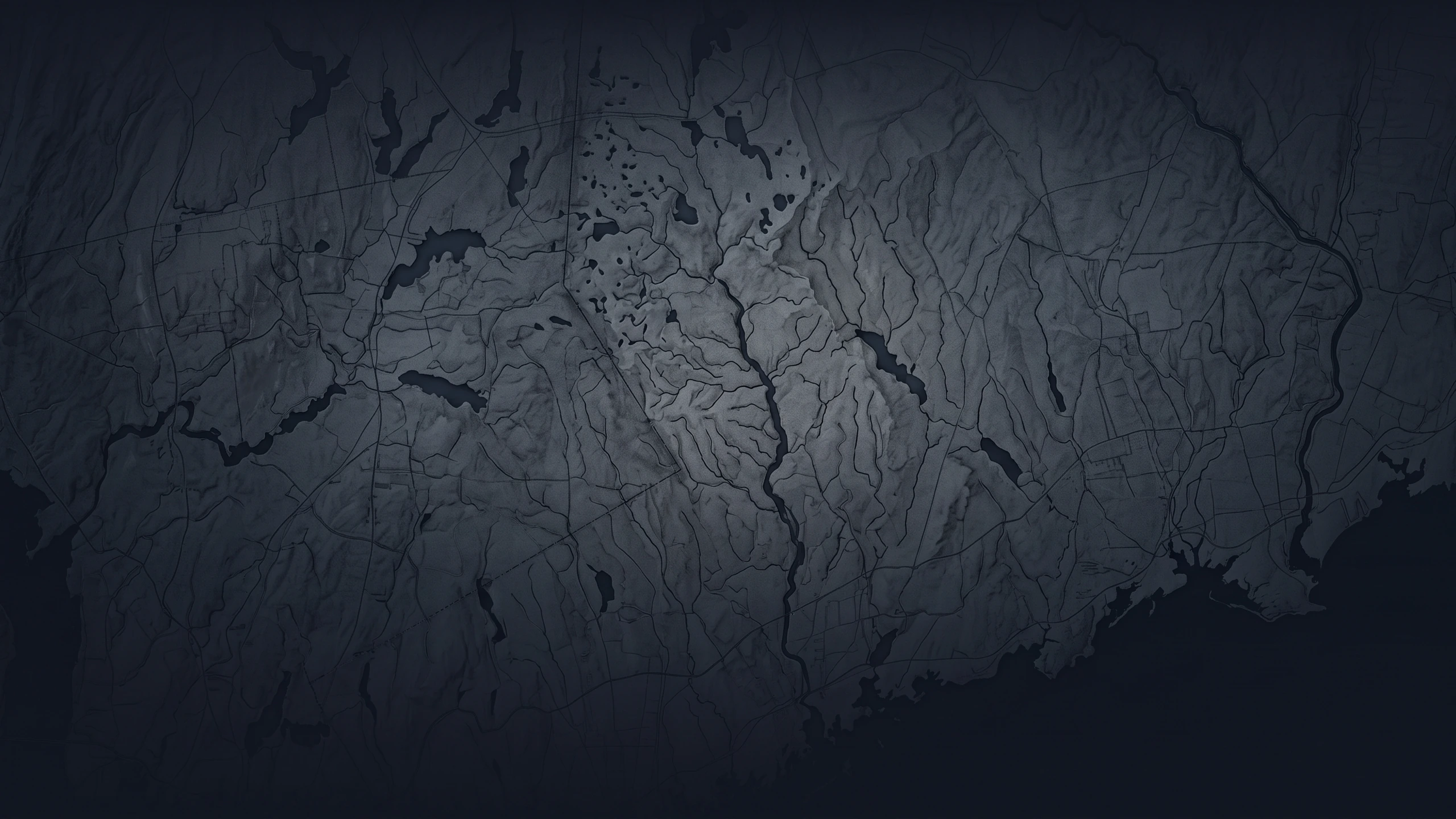
A river is never only a line. It is a gathering system: tributaries, lakes, low ground, crossings, edges, and flow. The Rippowam name belongs to that wider structure.
The watershed gives the name its real shape. It ties together Stamford, the northern interior, and the surrounding terrain across the Fairfield–Westchester corridor. It reminds us that what appears separate on the surface is often connected underneath.
That idea matters beyond geography. Source, in this context, is not simply where something begins. It is the hidden structure that makes later forms possible. The visible depends on the invisible. The finished depends on what came first.
Rippowam keeps that orientation close: look beneath the surface, understand the system, and respect the underlying conditions from which enduring things emerge.
The river in memory
The archival images give the name historical texture. They show the Rippowam not as an abstraction, but as a lived and observed place — a river crossed, photographed, mailed, described, and remembered.
There is something important in that modesty. These are not grand monuments. They are fragments of local record. A postcard. A river view. A scene near a bridge. Together they show how a place persists: not only through official histories, but through ordinary acts of naming and noticing.
This is part of what Source is meant to preserve. Not nostalgia, and not performance, but continuity. A recognition that names accrue meaning through use, repetition, and time.
The archive does not freeze the name in the past. It confirms that the name has endured.
What source means here
At Rippowam, source is both literal and philosophical.
It refers, first, to origin: the river, the watershed, the region, and the local history carried in the name. But it also refers to a way of proceeding — beginning with first principles, tracing systems back to their underlying structure, and preferring substance over surface.
That orientation runs through the wider project. In writing, it means returning to primary ideas rather than borrowed language. In ownership and investing, it means looking for what is durable beneath noise, fashion, and promotion. In stewardship, it means remembering that what appears self-contained is often fed by deeper currents.
The name Rippowam is a reminder of that posture. It asks for attention to origin, to place, and to the things upstream of appearance.
Continue